

This episode with Michael Proulx (“Proo”) was foreshadowed in the last one on mine tailings dams with Ankur Shah:

In turn, that was a continuation of the tailings thread started with John Metzger:

Michael makes meaningful progress for us on tailings dams because he used to lead a bond trading desk and is now an ESG analyst. Hence, we can connect three threads: how money markets work, how a disaster reaches a stock price, and where geospatial data fits in. We start by walking through the basics of equity versus credit markets. Equity holders bet on growth, while bondholders prioritize getting their principal back. This is why bondholders sit higher in the capital stack and recover more when a company fails.
The conversation then follows a concrete case: the 2019 Brumadinho tailings dam collapse in Brazil, and the 28% drop in Vale’s share price that followed:
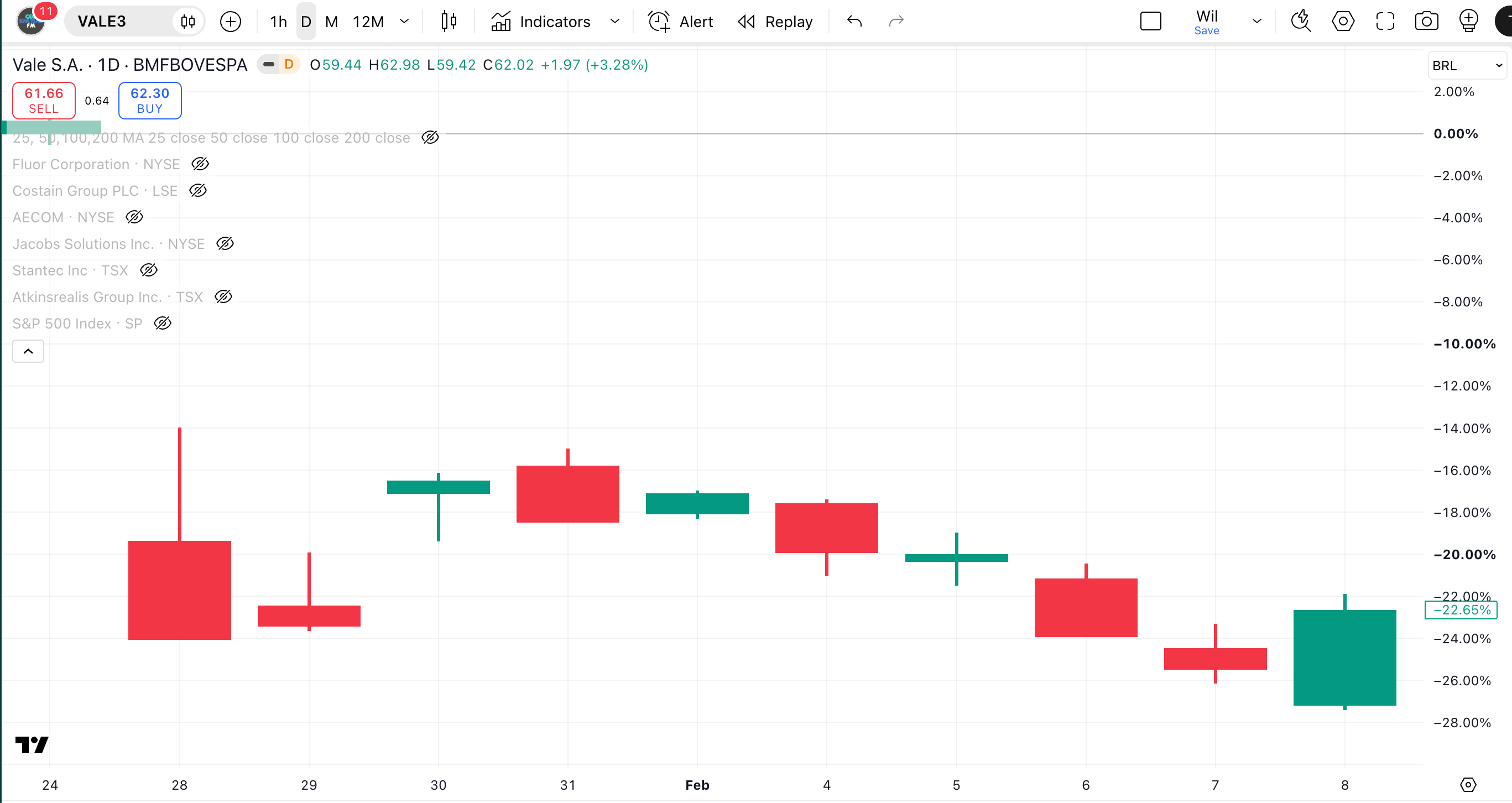
This is measured from the closing price of the prior week, a Thursday, because the event happened on a Monday. The comparison period ends February 8th 2019, as shown above. Over those 10 trading days, the value of the company went from $USD77B to 58B:
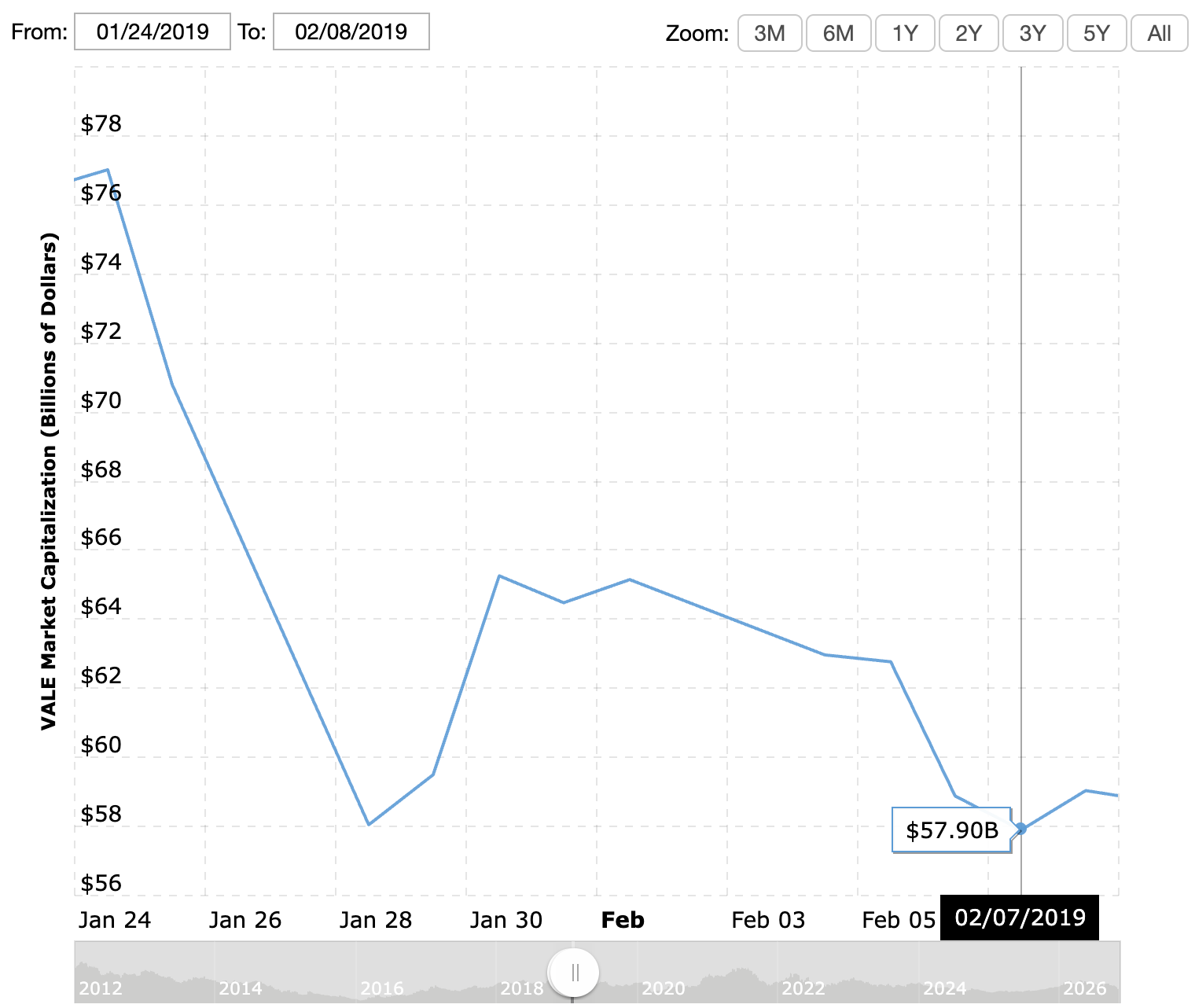
A nigh on 30% drop in the value of a company, especially when it amounts to $20B lost, warrants attention. Michael explains how a rating agency’s event-scoring system can trigger institutional investors’ committees to sell, and how the resulting selling pushes the price down. Event-driven selling, not only the disaster itself, is what moves the market.
The discussion then turns to what this means for mining oversight. Pension funds in the UK and Sweden pushed listed miners to disclose tailings facility locations, creating a dataset of roughly 2,000 sites. The discussion covers how geospatial analysis could go further: measuring proximity to communities, density changes, and early signs of instability.
The episode closes on conflict risk. Michael’s master’s research connected mining to conflict, and he points to cases where armed groups take over mines, drop maintenance, and leave tailings unmonitored. He also suggests that satellite imagery could help track armed group movements, and that geospatial intelligence tools might give investors earlier warning.
Listen to the full episode for the worked examples and the discussion of how to turn these risks into decisions.


