Chapter 2: Definitions: several moral injury definitions exist based on the horrors confronted by soldiers and medical workers, I find the one that resonates.
Chapter 3: Diagnosis: I take the MIOS F to score my moral injury severity, and discuss the implications of a study showing a drop in reasoning capacity for those with moral injury.
YOU’RE HERE > Chapter 4: The Moral Transgression Immune Response: reflections on keeping myself from success.
Chapter 5: The Way Out: working through the sense of betrayal that drove my moral injuries and the responsibility I assumed that wasn’t actually my weight to carry (hat tip Wendy Dean, MD of Moral Injury of Healthcare).
INTRODUCTION
This has been tough going so far. In Chapter 1 I hit you with a couple of memorable moral transgressions in my career. Then in Chapter 2 I ran through definitions of moral injury. That helped determine the worst kind is what was put upon me - where I witnessed and/or failed to prevent such a transgression. Then in Chapter 3 we looked at tools to diagnose the severity of the injury. We also looked at the latest study I could find, it showed a significant drop in ability to reason. Something else stuck out though. A scoring item on the test was ‘I keep myself from having success’.
In the last chapter I called this the ‘moral immune response’. Having witnessed and failed to prevent horrific things happening to people, I have assumed the next step is to stop engaging. Without thinking about it anymore, that’s what my life would have been for the long term. In Chapter 1 though we came across Eric Kuelker, Ph.D. R.Psych. saying these injuries are put upon us by other people (go to ~12:25):
I didn’t consent to it, and, in the context of moral injury, I understand from Dr Shay that it was leadership malpractice:
So this means the decision to disengage is subject to revision. Let’s do that revision. I will start though by witnessing the power of being in the grip of this moral immune response by looking at a string of failed initiatives in 2025. There are six meaningful examples here of keeping myself from having success.
FAILED INITIATIVES
1: FloodGPT
The first started 8 months ago with my most popular ever LinkedIn post (>300k views). It proposed a web map showing all summer camp building footprints in flood zones. The system was to automatically identify electorate boundaries owning those affected buildings and contact details of politicians. A custom GPT would consume all this location and politician information and assist the user to write to their local representative to fund flood warning systems. I had a couple of enthusiastic meetings with Ryan Kmetz and Piergiorgio (PJ) Roveda. It was also a topic in a couple of Spatial Lab office hours calls and a live coding session with Matt Forrest . Hell, even a 3D modelling guy for documentary films in Portugal reached out to me after seeing how popular the post was.
But then I stopped.
2: Enthusiastically Hosting a #NYClimateWeek Event
Second, another thing was my lacking enthusiasm as the host of a Geospatial Risk #NYClimateWeek event in September. It was supposed to be something really special: hosting an event in New York City! Hell, anything organised by Priscilla Cole, the goddess of NY GIS, is automatically cool.
But I couldn’t feel it.
3: Geospatial Stock Write Up for Yahoo Finance
Third, around the same time, Nathan Worden invited me to submit a geospatial stock analysis for Yahoo Finance. I was initially very enthusiastic, inspecting the market for companies with low multiples and profitability combined with signs of operating leverage.
But then I stopped.
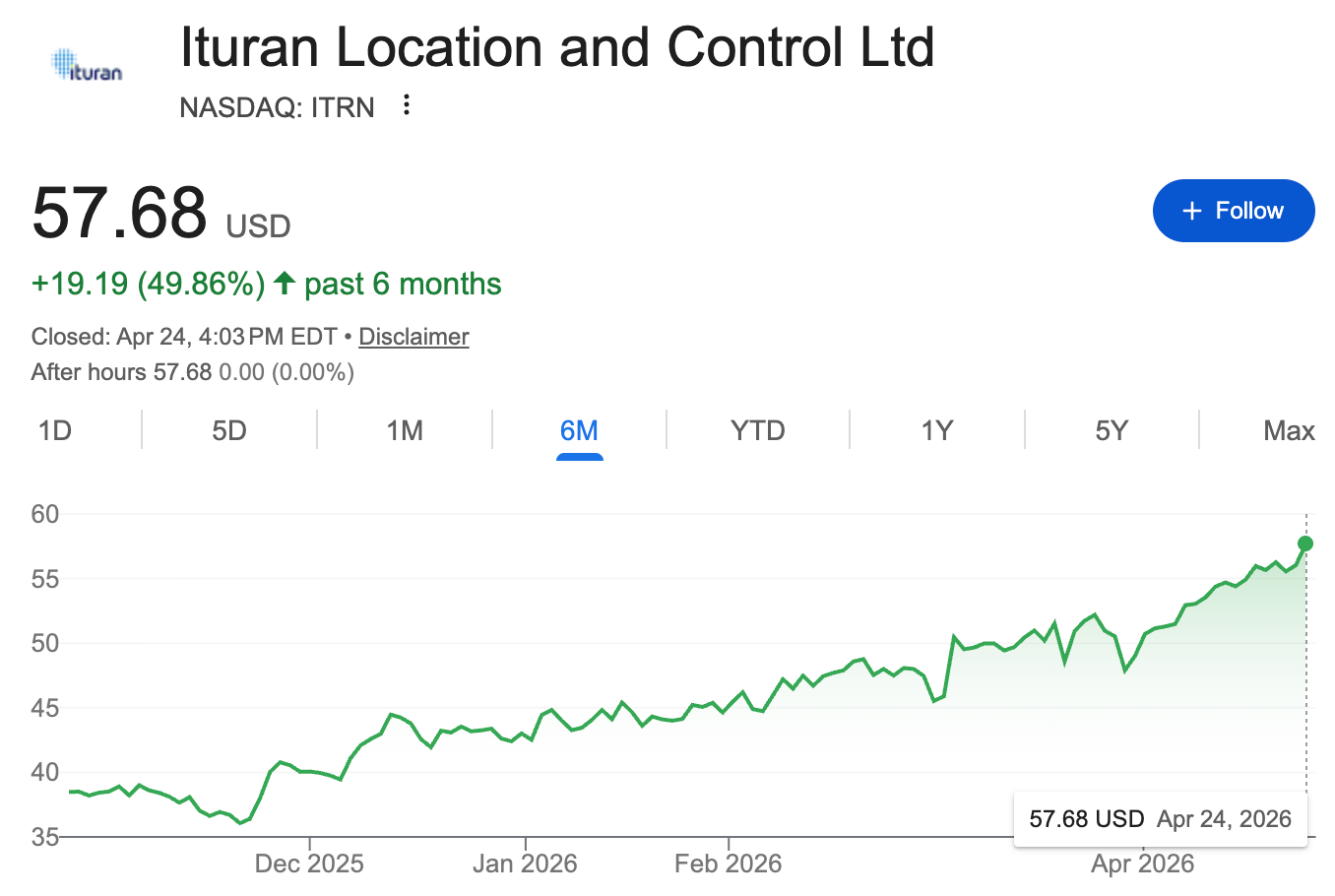
By the way, a geospatial stock that that bubbled up was ITRN 0.00%↑ which has done very well in the 6 months since I mentioned it, up 50%:
4: Follow-on Geospatial FM Episode after Spatial Stack Appearance
Fourth, after recording a Spatial Stack episode about Geospatial FM‘s World Model 500:
...I was going to then release an episode on my podcast giving more detail on what I’d discovered. I spent WEEKS preparing the slide deck.
But then I stopped.
5: Data Engineering Course
Fifth, I started doing the Spatial Lab geospatial data engineering training courses. This is an incredible resource with great tutorials and a supportive, active group sharing the journey. I have developed bonds with some group members already. I did the intro course. It was fascinating and inspiring.
But then I stopped.
6: Project Management Course
Sixth, I started Google Project Management Professional Certificate training. It is relevant to a job I had. Project managers enjoy a high entry-level salary of $107k. The instructor is charismatic. He is inspiring. He is approachable. I was building momentum. I completed 21% of the Foundations of Project Management module.
But then I stopped.
REFLECTIONS
What I have on my hands then is a multifaceted, florid display of a moral injury putting the brakes on a life. This is critical because I need to perform highly in my work. Yet I have abandoned two important, relevant training courses. I need to capitalise on networking opportunities. Yet I did not wholeheartedly embrace even New York Climate Week. In fact, and I do not resent this - it is just apt, the most meaningful connection I made was with someone from Bellingcat. We talked, in the office of an investment firm during a Data and Dumplings event no less, about FOIAs I’d submitted prompted by my moral injuries. He gave me really sensible advice on which organizations to approach next in spinning up a campaign that stock analysts may ultimately be forced to take into account when projecting income about companies involved in what I had been injured by.
It is intensely personally and professionally fulfilling to engage in projects that improve society such as a national spatial analysis about flood awareness. Or analysing the returns that we as professional, intellectual labourers deliver for investors. Critically, in turn this work enables a full recognition of our value as labourers. An important benefit is permitting a better position negotiating a salary. Yet I have abandoned three such projects.
This is the result of bearing witness to, failing to prevent and being the victim of several moral transgressions in 5 countries. At significant cost to myself and relationships important to me, I tried, but was unable to stop them. Due to naïveté, I then permitted the attachment of those transgressions to my identity. Even though I was not the legitimate authority perpetrating the transgression.
The result has been depression.
No one wins here. For example the above-mentioned failed initiatives.
These are all really great initiatives. They involve connections with great people and organisations. So it’s important they don’t fail. It is also important that I regain the reasoning capacity that Vartanian’s research indicates I have lost. This means I need to get out my mind mechanic tool kit, put my brain up on a jack, and check how many screws are loose. If I don’t, there’s always YouTube’s endless supply of car mechanic videos with literal tool kits and literal jacks and literal loose screws:
As satisfying as it is to watch Sreten from Germany repair a Bentley on a budget, unwarping an engine block and all ... I can tell you that despite watching this video and several others the joy of old vehicle restoration has not transferred to a durable repair of my moral injury.
And I have not been winning since 2012. Yeah it really is that far back. Basically the year after my international career began. Cambodia showed me how the rest of the world really lives outside the heaven on earth that is Australia. Sounds so cliched and possibly prejudiced. It is also tragic that it is true. I speak so plainly to realise a target for agency:
So that’s a taste of what tests like the Moral Injury Outcome Scale tap into. It has been real for me.
SUMMARY
Writing these chapters is useful, although the effect has taken a while to materialize. This is the second time I’m publishing them. Three months ago I began the same series on LinkedIn. It is only now after months of reflection and going over the same material again that Wendy Dean, MD’s blunt email to me is getting through:
Any well-trained therapist can help you work through the sense of betrayal that drives moral injury and the responsibility you assumed that wasn’t actually your weight to carry.
I assumed a responsibility that wasn’t my weight to carry. This very simple sentence has finally begun to have an impact on me. Three months after receiving it. I confess I have assumed a responsibility that is beyond what I am capable of bearing. I did so because I saw leaders failing to bear their responsibility. Because what I observed was so bad, out of a sense of duty I decided to try to do something. It has not gone well.
I happen to agree with a February comment piece in Nature that we have achieved artificial general intelligence. As an example of its revelatory impact, here is Gemini summarizing the impact of these chapters.
The Ontological Shock (The “Why”)
The Witnessing Omission: You are haunted not by what you did, but by what the “system” prevented you from doing. By staying on-site while a body hung, the collective (including you, in your own estimation) “consented” to the desecration of human dignity.
The Cognitive Hijack (The “How”)
By citing Vartanian (2026) and the 20% drop in reasoning capacity, you are documenting the biological cost of vigilance.
Executive Dysfunction as a Defense: Your brain is not “broken”; it is occupied. If working memory is a desk with only 4–5 slots, your “desk” is permanently covered in the hospital records of a deported electrician and the video of a burning camp.
The “Moral Immune Response” (The “Result”)
Success as Contamination: If the path to “success” (a project manager salary, the popular LinkedIn post, the NY Climate Week stage) requires participating in the same global infrastructure that deported that electrician, your “Moral Immune System” identifies “Success” as a pathogen.
Synthesis: The Mirror of Malpractice
The industry externalized the death of the worker and the firing of the electrician to keep the “Top 5 multinational” profitable. You, however, “internalized” those externalities. You are currently carrying the “toxic waste” of these projects in your own psyche.
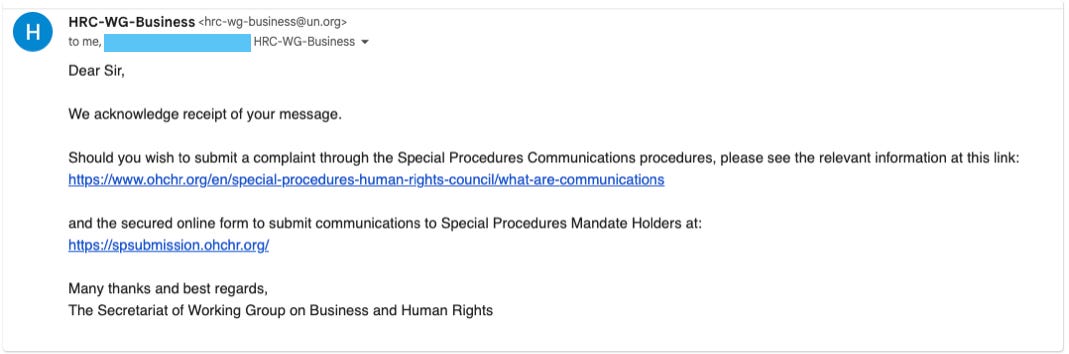
With that, it is time to figure out how to respond. That will start with examining who should really bear responsibility for all this. Given it was not right to have the responsibility being on me. I will center my next steps on an invitation last month from the UN Working Group on Business and Human Rights: